
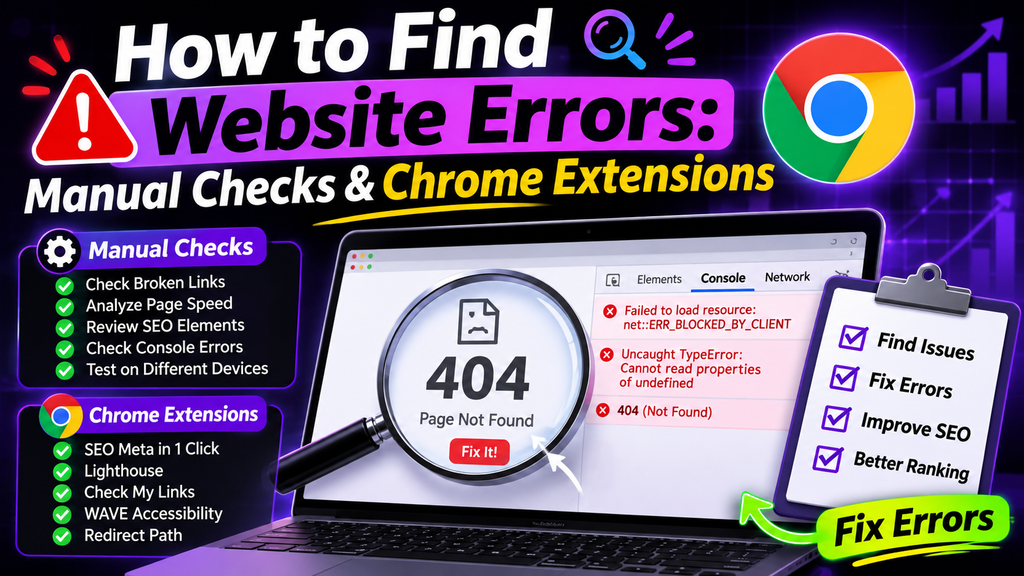
How to Find Website Errors: Manual Checks & Chrome Extensions is an important topic for website owners, bloggers, digital marketers, and SEO professionals who want to maintain a healthy and user-friendly website. Every website can develop errors over time, including broken links, slow-loading pages, missing images, incorrect redirects, and technical SEO problems. These issues can negatively affect user experience, website performance, and search engine rankings.
Table of Contents
Finding and fixing website errors regularly helps improve website quality and makes it easier for search engines to crawl and understand your pages. You do not always need expensive paid tools to identify these problems. You can use manual checking methods and free Chrome extensions to discover common website errors.
In this guide, we will explain how to identify website errors, which Chrome extensions are useful, and how to fix common technical problems step by step.
Why Is It Important to Find Website Errors?
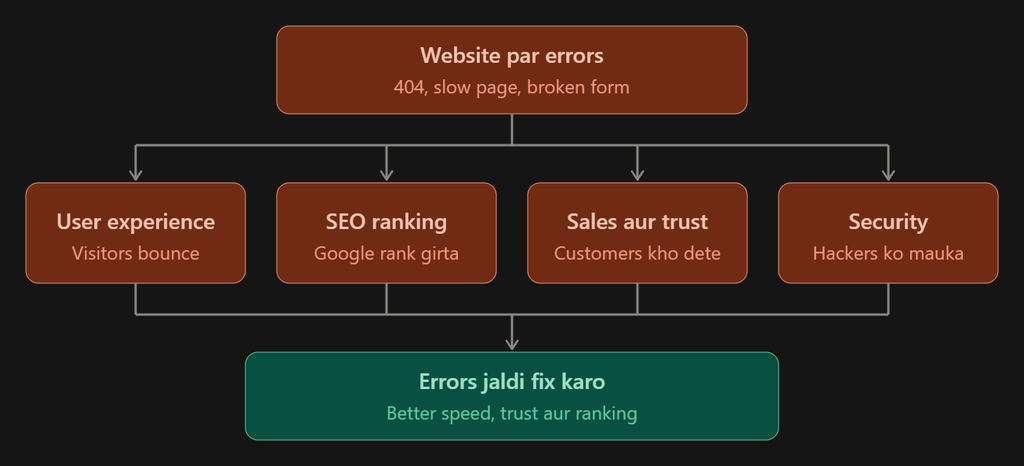
Website errors can create problems for both visitors and search engines. Imagine someone visits your website How to Find Website Errors: Manual Checks & Chrome Extensions to read an important article, but the page displays a 404 error. The visitor may immediately leave your website and look for information somewhere else.
Similarly, search engines may face difficulties crawling pages if your website contains broken links, incorrect redirects, or technical issues so do this How to Find Website Errors: Manual Checks & Chrome Extensions
Here are some important reasons to check website errors regularly:
- Better User Experience: Visitors can easily navigate your website without facing broken pages.
- Improved SEO Performance: Fixing technical problems helps search engines crawl your website more effectively.
- Faster Website Loading: Identifying unnecessary scripts and large images can improve page speed.
- Higher Website Reliability: Regular maintenance keeps your website functional and professional.
- Better Conversion Rates: A smooth website experience can encourage visitors to contact you or purchase products.
Understanding these benefits makes website error checking an important part of every SEO strategy.
How to Find Website Errors: Manual Checks & Chrome Extensions
There are two simple ways to identify website problems: manual checking and browser extensions. Manual checking allows you to inspect individual website elements, while Chrome extensions help automate certain tasks and identify issues quickly.
Using How to Find Website Errors: Manual Checks & Chrome Extensions both methods together gives you a better understanding of your website’s overall health.
1. Check Broken Links Manually
Broken links are among the most common website errors. They occur when a link points to a page that no longer exists or cannot be accessed.
For example, you may have published a blog post containing five external links. If one of those websites removes its page, the link may stop working.
How to check broken links:
- Open your website in Google Chrome.
- Visit important pages and blog posts.
- Click internal and external links.
- Check whether each link opens the correct page.
- Identify links displaying 404 errors.
- Replace or remove incorrect links.
Broken links can make website navigation frustrating, so checking them regularly is important.
2. Check Website Loading Speed
Website speed is an important part of user experience and technical SEO. Visitors generally prefer websites that load quickly, especially when browsing on mobile devices.
You can use Google PageSpeed Insights to analyze website performance.
Steps to check website speed:
- Open Google PageSpeed Insights.
- Enter your website URL.
- Click the Analyze button.
- Review mobile and desktop performance.
- Check recommendations for improving speed.
Pay attention to important Core Web Vitals, including:
- LCP (Largest Contentful Paint)
- INP (Interaction to Next Paint)
- CLS (Cumulative Layout Shift)
Improving these metrics can help create a smoother browsing experience.
3. Inspect Website Pages Using Chrome DevTools
Chrome DevTools is a built-in browser feature that helps developers identify technical website problems.
You can access it by pressing F12 or right-clicking a webpage and selecting Inspect.
Important sections to check:
- Console: Displays JavaScript errors and warnings.
- Network: Shows failed resource requests and loading problems.
- Elements: Helps inspect HTML and CSS elements.
- Application: Provides information about storage, cookies, and website resources.
The Console and Network tabs are particularly useful when investigating technical errors.
4. Check Missing Images and Incorrect Redirects
Images improve website appearance, but missing images can make pages look incomplete. Similarly, incorrect redirects can prevent visitors from reaching the intended destination.
Open your important website pages and check whether all images load correctly. Also, click navigation buttons and internal links to confirm that they redirect visitors to the correct pages.
Check for redirect chains, unnecessary redirects, and redirect loops. Correct these issues to improve navigation and website performance.
How to Find Website Errors: Manual Checks & Chrome Extensions for SEO
Chrome extensions make website checking easier because they can quickly analyze different elements without requiring complicated technical knowledge.
Here are some useful Chrome extensions that website owners and SEO beginners can use.
1. SEO Meta in 1 Click
SEO Meta in 1 Click is a useful extension for checking important on-page SEO elements.
It helps you inspect:
- Meta titles
- Meta descriptions
- Heading structure (H1, H2, H3)
- Image information
- Canonical URLs
- Meta robots information
This extension is especially useful when checking whether your website pages have properly optimized SEO elements.
2. Lighthouse
Lighthouse is a powerful auditing tool available through Chrome DevTools.
It helps analyze different aspects of website performance, including:
- Performance
- Accessibility
- Best Practices
- SEO
You can generate an audit report and review suggestions for improving your website.
3. Check My Links
Check My Links is a helpful Chrome extension for identifying broken links on individual webpages.
After installing the extension:
- Open the webpage you want to inspect.
- Click the Check My Links extension.
- Wait for it to scan the page.
- Review highlighted links.
- Investigate broken links and correct them.
It is particularly useful for websites containing multiple blog posts and external references.
4. WAVE Accessibility Extension
WAVE helps identify accessibility-related issues on webpages.
It can highlight problems such as missing alternative text, form-label issues, and certain accessibility errors.
Using WAVE can help you make your website easier to use for people with different accessibility requirements.
How to Find Website Errors: Manual Checks & Chrome Extensions Step by Step
Now that you understand How to Find Website Errors: Manual Checks & Chrome Extensions the manual checking process and useful extensions, it is time to combine both methods into a practical website audit.
Follow this simple process:
Step 1: Open Your Website
Start by visiting your homepage and checking whether it loads properly. Test your navigation menu, buttons, footer, and important sections.
Step 2: Check Important Pages
Visit your service pages, contact page, about page, and blog posts. Make sure every page displays the correct information.
Step 3: Analyze Technical Problems
Open Chrome DevTools and inspect the Console and Network tabs. Look for failed requests, JavaScript errors, and missing resources.
Step 4: Use Chrome Extensions
Run extensions such as Check My Links and SEO Meta in 1 Click to identify broken links and missing SEO information.
Step 5: Test Mobile Responsiveness
Open your website on a mobile phone or use Chrome DevTools device emulation. Check whether text, images, menus, and buttons display correctly.
Step 6: Fix Identified Errors
Create a list of problems and fix the most important issues first. Recheck the affected pages after making changes.
Common Website Errors You Should Never Ignore
Some website problems may look small but can affect website performance and visitor experience.
Here are some common errors you should monitor:
| Website Error | Possible Solution |
|---|---|
| 404 Page Not Found | Restore the page or add a relevant redirect |
| Broken Links | Update or remove incorrect links |
| Missing Meta Description | Add unique meta descriptions |
| Missing Alt Text | Add descriptive image alt attributes |
| Slow Loading Speed | Optimize images and scripts |
| Redirect Loops | Correct redirect configurations |
| JavaScript Errors | Inspect and fix problematic scripts |
| Mobile Display Issues | Improve responsive design |
Fixing these problems regularly helps maintain a technically healthy website.
How to Find Website Errors: Manual Checks & Chrome Extensions for Better SEO Results
Finding errors is only the first step. The most important part is correcting them and monitoring your website regularly.
Website owners should develop a simple maintenance routine. How to Find Website Errors: Manual Checks & Chrome Extensions Check important pages every week, review technical SEO reports regularly, and analyze website performance after making major design or content changes.
You can also use Google Search Console How to Find Website Errors: Manual Checks & Chrome Extensions to monitor indexing problems, Core Web Vitals, and other search-related issues.
Remember that not every warning reported by a tool is necessarily a ranking problem. Understand the issue before making changes. Prioritize errors that affect visitors, crawling, indexing, and website functionality.
Conclusion
How to Find Website Errors: Manual Checks & Chrome Extensions is a useful skill for anyone interested in website management, SEO, and digital marketing. Regular website audits help identify broken links, missing images, slow-loading pages, technical errors, and on-page SEO problems.
Manual checking gives you direct control over individual website elements, while How to Find Website Errors: Manual Checks & Chrome Extensions make the auditing process faster and easier. Tools such as Lighthouse, Check My Links, SEO Meta in 1 Click, and WAVE can help you identify different types of problems.
Start checking your website regularly, fix important errors, and monitor your improvements. A technically healthy website provides a better user experience and creates a stronger foundation for long-term SEO growth.
Frequently Asked Questions (FAQs)
1. How can I check website errors for free?
You can use Google Search Console, PageSpeed Insights, Chrome DevTools, and free Chrome extensions to identify common website errors.
2. Which Chrome extension is best for finding broken links?
Check My Links is a useful Chrome extension for scanning individual webpages and identifying broken links.
3. Do website errors affect SEO rankings?
Some website errors can negatively affect SEO, especially when they prevent search engines from crawling or indexing important pages.
4. How often should I check my website for errors?
It is a good practice to check important website pages weekly and perform a more detailed technical audit monthly or after major website updates if you wan t to skyrocket your knowledge then [click here]